Skip to content
Karen Weisblatt
Customer journey mapping session

CURIOUS FIRST.STRATEGIC SECOND.BUILDING NOW.

Over 20 years of learning how people work, where workflows break down, and which problems are worth solving. Now I use AI-assisted development to move from insight to working software faster than ever.

About

I'm a product leader with a deep interest in how people actually work, not in the abstract, but specifically: how they navigate complicated systems, where they get stuck, what they've built in spreadsheets because the real tools weren't good enough, and what they're trying to accomplish when they say something is broken.

That curiosity has shaped over 20 years of product strategy, user experience research, and analytics work across consumer technology, enterprise software, and financial services. I graduated from the Harvard Business Analytics Program, which sharpened my ability to work at the intersection of data, strategy, and business decision-making. Most recently, I've been leading product and analytics strategy at a business intelligence platform built for the wealth management industry, designing tools that help executives, regional directors, and advisors understand organic growth, client retention, advisor concentration, and succession risk.

In the past two years, I've been expanding my practice through AI-assisted development and delivery, building and shipping working products that let me move faster from insight to user experience. These range from a community coordination app for a long-running book club to a brand and website for a local micro-bakery, alongside enterprise analytics concepts for wealth management firms.

I'm based in Austin, Texas.

Karen Weisblatt

What I do

I help teams move from ambiguity to clarity by understanding users deeply, modeling complex domains, and translating what I find into product direction and working solutions.

User and Workflow Discovery

I talk with users and stakeholders to understand how work actually gets done, including the workarounds, the spreadsheet logic, the handoffs, and the friction that never makes it into a requirements document.

Problem Definition and Product Strategy

I translate ambiguous, complicated situations into clear product direction. I'm good at finding the level of conversation that matters, and keeping teams there even when the details get messy.

Analytics and Data Product Design

I design decision-support experiences for domains where metrics, workflows, and business context have to come together, and where the wrong design leads to the wrong decision.

AI-Assisted Development and Delivery

I use AI to move faster across the entire product delivery cycle. Sometimes that means a working prototype to test an idea. Sometimes it means building and shipping the whole product myself.

Cross-Functional Alignment

I work across executives, users, engineers, data teams, and business stakeholders to build shared understanding of what should be built and why. People with competing interests tend to align around clarity.

Selected work and experience

Silicon Hills Technologies · Head of Product · 2025 – Present

I lead product strategy and roadmap for Levanta, a wealth management growth intelligence platform for large RIA aggregators, managing UX designers, front end and back end developers, project management, and scrum. I translate leadership's strategic questions into prioritized deliverables including executive briefs, board reporting, succession planning tools, in addition to dashboards, using AI to help surface pattern-level insights.

Apex Fintech Solutions · Director, Advisory CX · 2023 – 2025

I engaged advisory clients across the full spectrum of the RIA market, from the largest aggregators in the United States to the smallest fintech startups, conducting journey mapping sessions to extract the pain points that unlocked strategy for how Apex could better serve the $128T advisory market.

Charles Schwab · Director, User Experience Research · 2016 – 2023

Led teams shaping product strategy for enterprise tools used daily by tens of thousands of advisors including the Move Money application. In Schwab's Innovation Lab, I delivered a fully coded, functional prototype that reimagined advisor workflows end to end utilizing service design principles exploring how advisors interface with custodian platforms, support teams, and their own clients to save time and reduce friction across the entire experience.

Polycom · Senior Manager, Product Management · 2012 – 2016

I owned the flagship Immersive Telepresence portfolio, a category-defining, high-end video conferencing solution, meeting personally with every client and every sales team that engaged them to understand the nuances of how the product was sold and used. That deep client exposure shaped the product and business strategy that returned the portfolio to profitability in a $1.6B market.

Dell · Product and Digital Media Leadership · 2009 – 2011

I managed multiple agencies across creative production, media buying, and product listings, using sophisticated audience targeting technology and constant experimentation to drive return on ad spend. That approach produced record-setting revenue for Dell and unprecedented traffic during peak conversion events, contributing to 350% revenue growth and $300M+ in online affiliate revenue.

Dell · Product Manager, Point of Sale Solutions · 2003 – 2005

I defined and delivered Dell's first branded point-of-sale solution, conducting the user research and market analysis that shaped the strategy to enter a $27B hardware market, from scratch, with no existing playbook. Working closely with IP attorneys throughout the enclosure design process, I was awarded two design patents, making this one of the most technically and strategically complete product launches of my career.

Selected companies: Charles Schwab, Apex Fintech Solutions, Polycom, Dell, MicroAge, Cigna, Austin Opera, Reynolds Metals Company, King Ranch, Bank of America, GAP

Recent builds

Products I designed and shipped myself, using AI-assisted development to move from a real workflow problem to a working product.

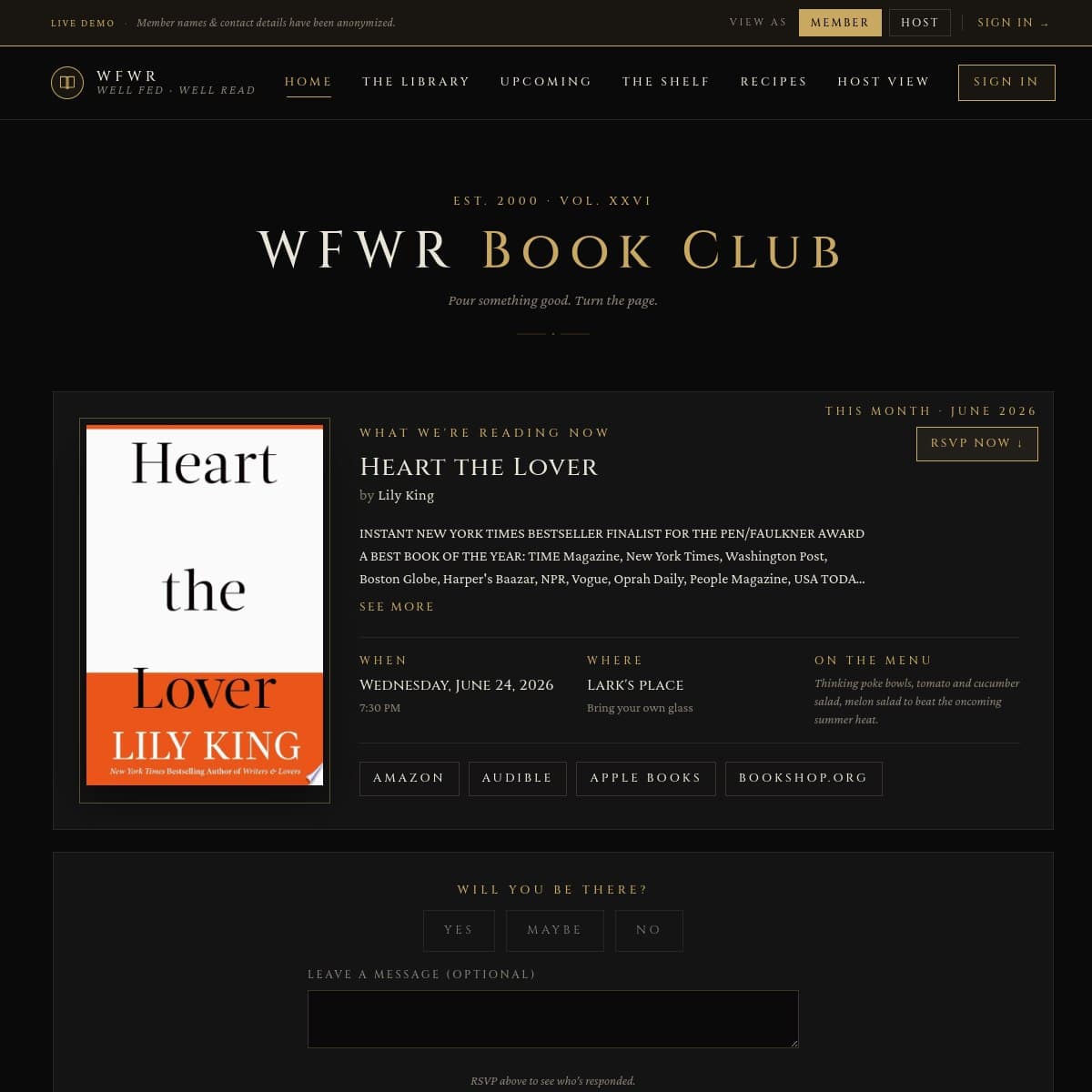
Book Club App website landing page

Book Club App

This project started from a real, specific pain: a long-running book club coordinating entirely on group texts, a shared spreadsheet no one trusted, and someone's memory. I designed and built a private web app that handles book selection, meeting scheduling, member management, and shared planning. The process was a deliberate practice run in AI-assisted development, moving from a real workflow problem to a working product.

Product concept · UX design · AI-assisted full-stack development · Supabase · Twilio SMS

AI-Assisted DevelopmentCommunity ToolsUX DesignWorkflow DesignFull-StackSupabaseTwilioNext.js
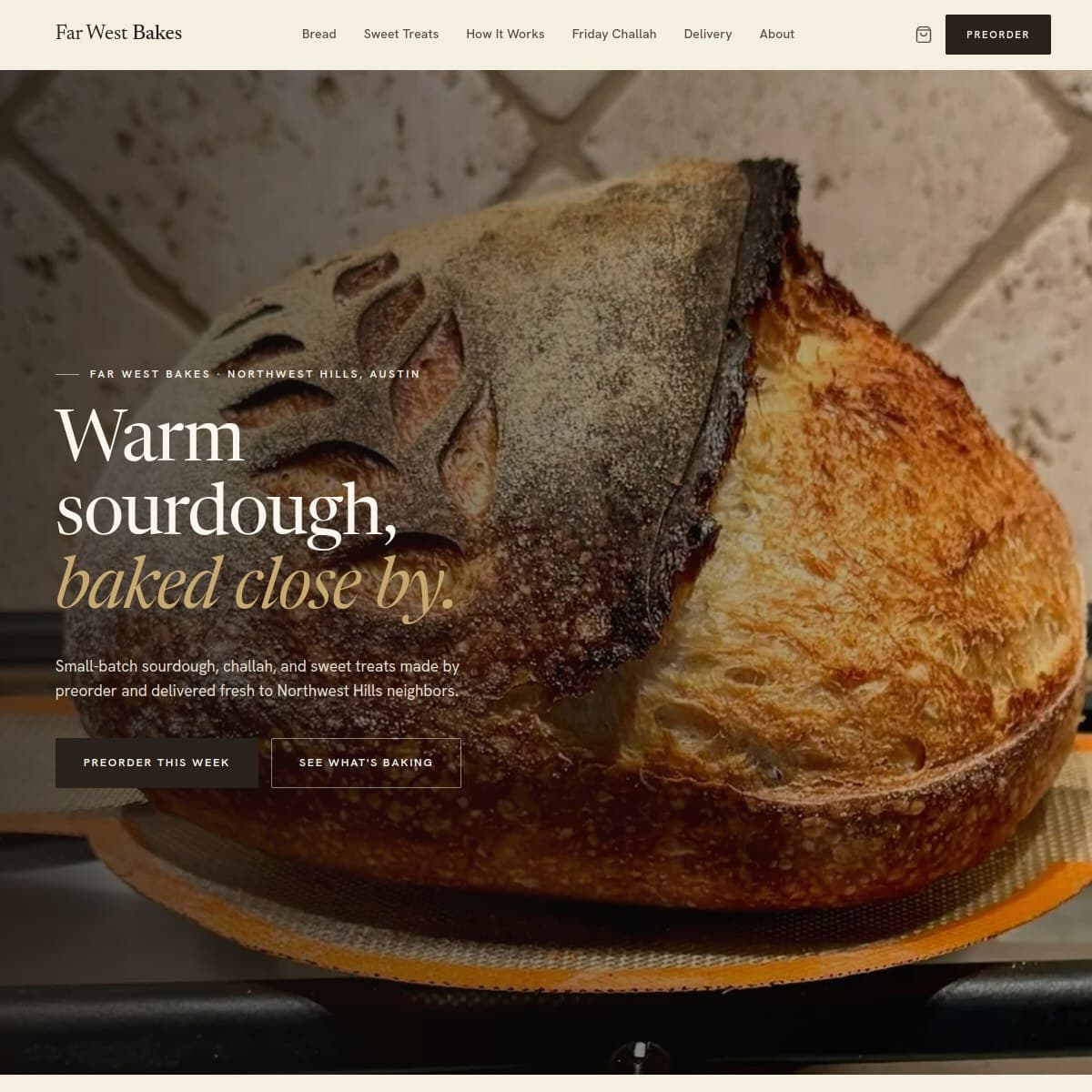
Far West Bakes website landing page

Far West Bakes

Far West Bakes is a small-batch home bakery concept built around the kind of baking that takes time: naturally leavened loaves, laminated doughs, and challah made the long way. The project combined brand positioning, storytelling, site architecture, and responsive web execution, with the goal of making a personal food business feel discoverable, warm, and easy to understand. AI-assisted development made it possible to build something polished without a traditional agency engagement.

Brand positioning · Information architecture · Web design · AI-assisted development

Brand StrategyWeb DesignLocal BusinessInformation ArchitectureAI-Assisted DevelopmentResponsive Website

How I work

Whether the problem is enterprise analytics, a community app, or a small-business website, my process follows a similar pattern: understand the real workflow, model the domain carefully, make the product tangible, and refine it through feedback.

  1. Understand the Real Workflow

    I start by understanding how people actually do the work today, including the informal workarounds, the spreadsheet logic, the handoffs, and the decision points that never make it into a formal spec. The gap between the official process and the real one is usually where the product problem lives.

  2. Model the Domain

    Before jumping to screens, I define the users, entities, relationships, rules, and metrics that shape the product. In complex domains (wealth management, community tools, food businesses), a small misunderstanding at this stage leads to the wrong product decision later.

  3. Make It Tangible

    I use design tools and AI-assisted development to move quickly from concept to working prototype or realistic artifact. The goal is to give people something real enough to react to, critique, and improve, not a finished product, but a faster path to better judgment about what the finished product should be.

  4. Refine Through Feedback

    Prototypes are conversations, not conclusions. I use feedback to clarify what matters, what is confusing, what should be cut, and what should be built next. The most useful thing a prototype can do is surface the questions we should have been asking earlier.

Let's connect

I'm always interested in conversations about product strategy, wealthtech, analytics design, data products, and practical uses of AI in product delivery.